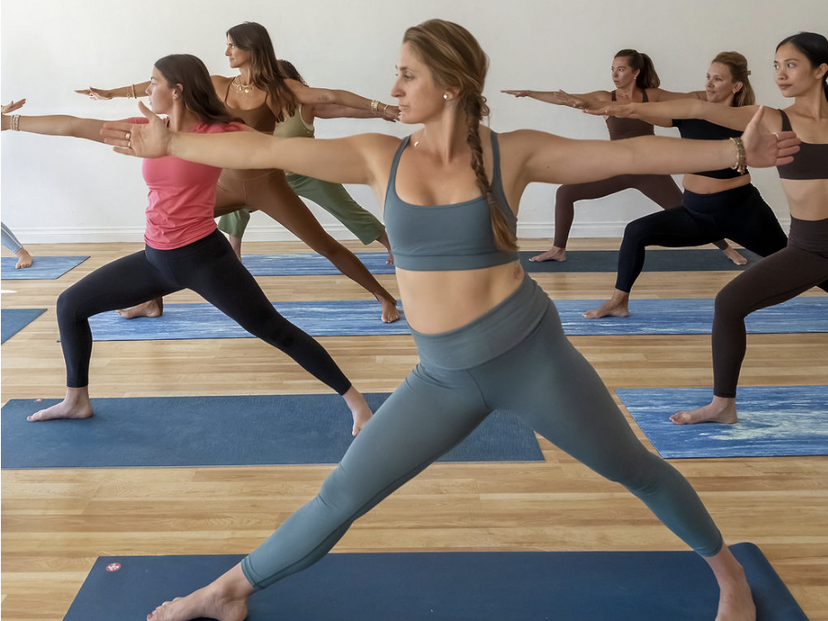
Most yoga practitioners have experienced the difference between a class that leaves them feeling genuinely well and one that leaves them feeling wrung out, vaguely strained, or oddly unsettled. The variables people typically point to when explaining this difference are teacher quality, class intensity, or style compatibility. What is rarely discussed but almost always responsible is sequencing: the specific order in which postures, transitions, breathwork, and rest are arranged within a class, and the physiological logic, or absence of it, behind that arrangement.
In yoga classes taught at an advanced level, sequencing is not aesthetic or intuitive. It is based on a detailed understanding of how the body’s tissues respond to mechanical load, how the nervous system regulates itself through a practice session, and how the cumulative effects of posture choices build or undermine each other over the course of sixty to ninety minutes.
The Physiological Principles Behind Intelligent Sequencing
The body enters a yoga class in a specific physiological state, and intelligent sequencing works with that state rather than imposing demands on tissues that are not yet prepared for them. The warm-up phase of a well-designed yoga class is not a perfunctory gesture toward safety. It is a physiologically meaningful preparation that changes the mechanical properties of tissue in ways that directly affect what is safe and effective in the class that follows.
Connective tissue, including the fascia, tendons, and ligaments that stabilise joints and transmit force across the body, is thixotropic in its mechanical behaviour. This means it behaves more like a viscous fluid when warmed and mobilised, and more like a gel when cold and still. The mechanical demands of deep stretches, weight-bearing balances, and complex spinal movements are considerably safer when delivered to warm, mobilised tissue than to tissue in its cold, more rigid state.
An advanced yoga teacher designs the opening phase of a class specifically to address this. Gentle, rhythmic movements that take joints through their available range without load are used to warm synovial fluid and increase its viscosity and lubricating effectiveness. Breath-coordinated movements that mobilise the spine in multiple planes are used to activate the multifidus and deep abdominal muscles that stabilise the lumbar spine before any significant load is placed on it. Shoulder girdle mobilisation precedes any weight-bearing in the arms.
The contrast with poorly sequenced classes is instructive. A class that moves directly from a brief warm-up into deep hip openers, demanding backbends, or full arm balances before these preparatory conditions have been met is not just less effective. It is genuinely more likely to produce the microtraumas that accumulate into chronic injury.
The Nervous System Arc of a Well-Designed Class
An equally important sequencing principle concerns the nervous system rather than the musculoskeletal system. A yoga class should have a coherent nervous system arc: a trajectory that moves deliberately from the practitioner’s entry state, typically some degree of sympathetic activation from the demands of daily life, toward the parasympathetic state that the class is designed to produce.
This arc is not a simple linear progression from active to passive. It typically involves an initial phase of gentle activation that brings the practitioner into body awareness, a middle phase of greater physical demand that may involve significant sympathetic activation through effort and challenge, and a final phase of deliberate downregulation that provides the nervous system reset the practice is ultimately aiming for.
The sequencing failure that most commonly disrupts this arc is poor placement of stimulating elements relative to calming ones. A class that introduces highly activating practices, including strong backbends, advanced inversions, or intense breathwork techniques, in the final third of the session rather than the middle will produce practitioners who leave class aroused rather than settled. This is not a teacher quality issue. It is a sequencing issue, and it can occur even in classes delivered by technically skilled teachers who have not thought carefully about the nervous system trajectory of their design.
The specific positioning of savasana, the final resting posture, is the most consequential sequencing decision in any class. A savasana placed too early, before the nervous system has fully transitioned to parasympathetic dominance, produces a rest that is physically present but neurologically incomplete. A savasana that is adequately long and properly approached, with a deliberate transition from the preceding active phase, allows the integration of the class’s physiological and neurological effects in ways that are genuinely therapeutic.
Peak Pose Planning and Its Injury Prevention Implications
Advanced yoga class design is often organised around a peak pose: a posture that represents the greatest technical and physical demand of the session and toward which the preceding sequence is systematically directed. The concept of peak pose planning is one of the most important contributions that contemporary yoga pedagogy has made to injury prevention.
When a class is built around a peak pose, every preceding posture can be evaluated in terms of whether it contributes to the preparation for that peak. If the peak pose is a deep backbend, the preceding sequence should systematically open the thoracic spine, lengthen the hip flexors, and activate the back body muscles in preparation. If the peak is a challenging inversion, the class should build shoulder stability, core activation, and proprioceptive readiness specific to that inversion’s demands before attempting it.
This systematic approach stands in direct contrast to the ad hoc sequencing of classes that simply move through a variety of postures without a coherent preparatory logic. In the latter format, practitioners are regularly asked to perform demanding postures for which their tissues have not been specifically prepared, and the cumulative injury risk over months and years of such practice is substantially higher than in a well-sequenced class.
The peak pose model also has important implications for how different practitioners within the same class experience the session. A skilled teacher who designs with a clear peak in mind can offer meaningful progressions and regressions around that peak, ensuring that practitioners at different levels are working toward the same physiological goals through postures calibrated to their individual capacity.
Counter-Sequencing and Recovery Integration
One of the most sophisticated elements of advanced yoga class design is the strategic use of counter-postures: movements specifically chosen to neutralise the accumulated effect of the preceding work and prevent the compensation patterns that develop when joints are repeatedly loaded in one direction without being returned to a neutral state.
Every posture creates a specific mechanical effect on the joints and tissues it loads. A sequence of deep forward folds, for example, places sustained compressive load on the posterior intervertebral discs and stretches the posterior chain through its full range. Without deliberate counter-sequencing, this accumulated effect can produce a quality of tissue fatigue or vulnerability at the joint’s end range that increases injury risk in subsequent postures.
Advanced teachers account for this through the strategic placement of gentle backbends after forward fold sequences, neutral standing postures after deep hip openers, and supine core work after extended arm balance sequences. These counter-postures are not afterthoughts. They are as carefully chosen as the peak postures themselves.
Studios like Yoga Edition invest in teacher development specifically because sequencing intelligence is not something that emerges from a 200-hour training alone. It develops through sustained study, clinical observation, and the kind of continued professional development that separates teachers who understand why their classes are structured as they are from those who are simply reproducing templates they learned in training.
The difference between a class that builds your practice and one that gradually accumulates microtrauma often comes down entirely to sequencing. It is the invisible architecture of every yoga session, and it is worth understanding well.